Lena

A 2022 review found that both high and low levels of IGF-1No. They talk about correlation, not casuation.
increase mortality risk
Well, no wonder that ill people have abnormal hormone levels.
You logged in using a passkey from another device. For faster access next time, add a passkey to this device.
Benefits:
noface 🇺🇦Taken together with https://groups.io/g/MTFHRT/message/6100, the following suggests that, while still having a role in controlling develoent size when things are happening, there are pituitary mammogens besides E, PRL, and hGH that are needed for complete breast develoent. I still wasn't able to exclude LH/FSH from my list of suspects.
https://www.jci.org/articles/view/111910 Primate mammary development. Effects of hypophysectomy, prolactin inhibition, and growth hormone administration. The pituitary gland has been found to be an important factor in mammary development in primates. Hypophysectomy in 12 sexually immature monkeys caused significant inhibition of estradiol (E2)-induced mammary growth and development. A histological index of mammary development in sexually immature hypophysectomized animals was lower (0.82) than in intact E2-treated controls (3.4; P less than 0.008). Hypophysectomy also inhibited growth of the mammary gland as judged by a size index. Despite the hypophysectomy, E2 stimulated some, albeit blunted, mammary growth and development, which may have been due to incomplete hypophysectomy. Selective inhibition of prolactin by ergot drugs in intact animals did not prevent full mammary development, suggesting that there may be pituitary mammogens other than prolactin, or that very low or unmeasurable concentrations of prolactin were sufficient to synergize with E2 to cause full acinar development. The mean histological index was 3.08 in E2-treated animals and 3.16 in animals treated with E2 plus pergolide. There was also no difference in the size of the glands. We evaluated the effect of growth hormone on mammary development by treating three hypophysectomized animals with pure 22,000 mol wt human growth hormone (hGH) (Genentech, Inc., South San Francisco, CA). We found that physiological or slightly supraphysiological concentrations of hGH in animals with unmeasurable prolactin were incapable of restoring the capacity of E2 to induce full mammary growth. These findings suggest that, if growth hormone is a mammary mitogen, that physiological concentrations are insufficient to synergize with E2 to induce full mammary growth or that other forms of hGH are mammogenic. Our studies suggest that the role of the pituitary gland in mammary mitogenesis in primates is more complicated than previously thought. They also raise the possibility that heretofore unidentified pituitary substances may be mammogenic. |
noface 🇺🇦Given prolactin receptor being homologue of the GH receptor and triggering similar activation pathways...
Title: Prolactin Controls Mammary Gland Development via Direct and Indirect Mechanisms https://www.sciencedirect.com/science/article/pii/S0012160699992710/pdf Abstract: The inactivation of the prolactin receptor gene by homologous recombination has made it possible to investigate the role of prolactin signaling in mammary gland development without resort to ablative surgery of the endocrine glands. In knockout mice lacking the prolactin receptor, mammary development is normal up to puberty. Subsequently, the ducts branch less frequently than those of wild-type animals. While terminal end buds differentiate to alveolar buds in wild-type females by the end of puberty, in knockout females terminal end bud-like structures persist at the ductal ends. To distinguish between the developmental defects that are intrinsic to the epithelium and those that result from systemic endocrine alterations in prolactin receptor knockout mice, mammary epithelium from prolactin receptor knockouts was transplanted into mammary fat pads of wild-type mice. In virgin mice, the knockout epithelial transplants developed normally at puberty, indicating an indirect effect of prolactin on ductal development. Prolactin receptor knockout females are infertile due to multiple reproductive defects, but epithelial transplants allowed us to assess the extent to which the absence of prolactin receptor is limiting, under systemic conditions that allow full mammary gland development. During pregnancy, the prolactin receptor knockout transplants showed normal side branching and the formation of alveolar buds, but no lobuloalveolar development. Thus, prolactin affects mammary morphogenesis in two different ways: it controls ductal side branching and terminal end bud regression in virgin animals via indirect mechanisms, but acts directly on the mammary epithelium to produce lobuloalveolar development during pregnancy. |
CallieInteresting! I think seeing you mention pulsing and how E pulses through
the day for cis women is sort of another thought of why I wanted to try topical(which I'm doing now and like), I got the impression it's levels might vary through the day, or at the very least there's more peaks than an average injections schedule, also twice a day etc would provide more I'm sure. Which I was doing twice a day and just recently in the course of rapidly lowering my dose from a high topical dose(but also refining my application and stuff so I'm not sure if I'm actually getting much lower levels or just more from less) I switched to once a day application, which also seems to be pretty fine, I'm blown away I'm not like having some serious issues from lowering like I did lol so far. But anyway this makes me want to apply twice a day again after all, and then can do less each time as well, although it was nice only doing it once a day haha. Suppose I can try both, etc I wish I had time for rabbit holes like I used to lol On Mon, Nov 8, 2021 at 6:04 PM noface <antonysavich@...> wrote:
Here is another placeholder for something very curious, I just know what |
noface 🇺🇦Here is another placeholder for something very curious, I just know what to make of it at the moment. It has to do with that idea I was throwing around about pulsatile E and associations with whole body functions vs flat steady levels. I think pulsatile E in females contributes to different GH production patterns vs males, and it appears now this does have a definite difference on hormonal metabolism via things like sexually dimorphic P450 expression patterns in the liver. For one, it may explain the difference in E1:E2 ratios trans women obtain when taking E2 pills - whether their HPS axis patterns look male or female enough to the liver (and possibly other organs that metabolize hormones).
If someone wants to volunteer to look into this further, that'd be great. I will too in due time, I'll just be busy in the coming weeks and not sure how far I will get. But if anyone wants to find a rabbithole to get lost in, I'd say this is a big one. https://www.ncbi.nlm.nih.gov/pmc/articles/PMC52190/ Interpulse interval in circulating growth hormone patterns regulates sexually dimorphic expression of hepatic cytochrome P450. "Plasma growth hormone (GH) profiles are sexually differentiated in many species and regulate the sex-dependence of peripubescent growth rates and liver function, including steroid hydroxylase cytochrome P450 expression, by mechanisms that are poorly understood. By use of an external pump to deliver to hypophysectomized rats pulses of rat GH of varying frequency and amplitude, a critical element for liver discrimination between male and female GH patterns was identified. Liver expression of the male-specific steroid 2 alpha (or 16 alpha)-hydroxylase P450, designated CYP2C11, was stimulated by GH at both physiological and nonphysiological pulse amplitudes, durations, and frequencies, provided that an interpulse interval of no detectable GH was maintained for at least 2.5 hr. This finding suggests that hepatocytes undergo an obligatory recovery period after stimulation by a GH pulse. This period may be required to reset a GH-activated intracellular signaling pathway or may relate to the short-term absence of GH receptors at the hepatocyte surface after a cycle of GH binding and receptor internalization. These requirements were distinguished from those necessary for the stimulation by GH of normal male growth rates in hypophysectomized rats, indicating that different GH responses and, perhaps, different GH-responsive tissues recognize distinct signaling elements in the sexually dimorphic patterns of circulating GH." |
CallieCool stuff noface! I can't decide from reading random tidbits if I'd guess
higher/healthy/high normal levels of growth promoting things well supplied with necessary nutrients etc would help replication that is gonna occur regularly anyway occur more correctly and be less likely to "make a mistake"(cancer etc) or like if less growth effect in general might be better/more protective lol. On Sat, Nov 6, 2021, 4:35 PM Mélodie <LucieDiamond@...> wrote:
Interesting comments. Thanks. |
MélodieInteresting comments. Thanks.
On Sat, Nov 6, 2021 at 08:58 PM, noface wrote:
|
noface 🇺🇦There are more concerns with therapy that increases GH/IGF levels, like acromegaly and diabetes that creep up in some cases when the levels achieved are supraphysiological. But, physiological levels for the aging population are rather well defined I think. Normally, you measure IFG-1, as that is the hormone that effects all tissues. For example, my local lab's reference ranges - http://tests.lifelabs.com/test_information.aspx?id=25156&view=reporting
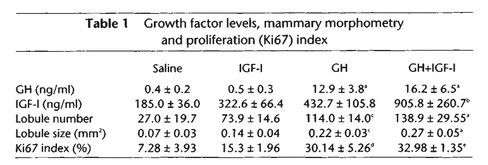
So, for example, IGF-1 levels anywhere from 75 to 270 or so is considered normal for me at my age. But, the range is very broad as you can see, and everybody "normal" or "within age appropriate physiological levels" will fall differently within that range. An endo will say - 80 is normal. And 160 is normal. And 240 is normal. But 240 is three times 80 - a very very big difference in how you'll feel and look at those levels. Puberty norms are 100-600-ish. Around 432±100 was what that study showed with GH only stimulation. GH+IGF produced 905±260. Based for the untreated monkeys was 185±36. Which is representative of average levels for humans in their 30's. Treatment protocols for humans with AGHD - start the patient on 0.2-0.3mg rhGH daily, assess IGF-1 every month, adjust rhGH dose so as to get IGF-1 to within SD to SD+2 (basically, to above average and high above average. I think typical blood test normal ranges are ±3 SD? 5-96% of "normal" readings? I'm not a fan of statistics nomenclature) - upper quartile of the "normal for age" range is the target essentially. And that is a level that more than half of us don't even have. An additional thing that's mentioned frequently in the guidelines and drug monographs - females on oral ERT will need a higher rhGH do see to achieve same target IGF levels. Based on my previous readings and posts on the subject, high dose parenteral estradiol will do the same thing - soak up GH activity by increasing GHBP levels which lowers IGF-1 production in tissues and thereby its effect. There is another component to consider, in relative terms to all this. When people start looking at GH therapy, that obvious tumor risk pops up all the time. I have that concern too. But, a number of things we do affect IGF strongly, yet nobody bothers to take IGF-1 effect into account. Like oral E and high dose injection E reducing IGF levels. Or take my amphetamine experience. From what I came to realise, amph before HRT had a rather weak effect on my brain overall, and the majority of its effect had to do with boosting my IGF-1 levels to supraphysiological values. I was lean. I healed well. My hair and nails grew really fast and strong. To the point of me getting concerned with how thick and strong my nails were growing at some point. I didn't think about any of it at the time in terms of IGF and its tumorigenic effect. Neither did any of my doctors when they prescribed me my amph for ADD. There are other medications you can take that indirectly, but certainly increase IGF. Same with "natural" things you can take and do, like fasting, diet, exercise. But the moment you mention increasing your IGF via GH therapy, all of a sudden tumorigenesis somehow becomes a problem... Yet the end effect is the same - it doesn't matter which way you get your IGF to where it is, the risk is based on that level, not on the method. In regards to the risk, it's a titter totter. https://www.ncbi.nlm.nih.gov/pmc/articles/PMC3183535/ If you look through that article, you will see that there are more risks to a body from GH insufficiency than risks of treatment. If fact, they mention no increased risk to treatment. https://pubmed.ncbi.nlm.nih.gov/20610598/ https://pubmed.ncbi.nlm.nih.gov/23935131/ Pfizer says no risk. (One of the authors of those studies is same) But, like, meh, manufacturer study, right? I scraped for consensus on the subject and did not really find any other evidence of increased risk of new cancer due to bumping IGF-1 artificially into "age appropriate physiological range" (upper quartile, 200-250 generally speaking). There was some talk about increased risk of resurgence upon therapy by existing tumors dealt with using radiotherapy prior to therapy. But, some of the comments also pointed fingers at radiotherapy being the initiator of the problem. I def. welcome any references to the contrary. Please prove me wrong. I do agree though, that one of the mechanisms of action for high dose oral/parenteral E therapy for cancer survivors is in its strong suppression of GH activity and IGF-1 levels - very effective to prevent resurgence of cancer. There is no evidence that in a healthy aged adult increasing IGF levels produces an increase in risk of new cancer. And, I don't see how keeping IGF-1 down "naturally" (our HRT def. has a strong effect on it), as in being content with a low level if that's what you have, is helpful for feminization. Or life in general. Low IGF sucks in many more ways than just for feminine fat distribution, hair regrowth or breast development. This comes from very personal experience on the subject. On Sat, Nov 6, 2021 at 11:08 AM, Mélodie wrote:
|
MélodieAt present, it is not clear what constitute “physiological” GH/IGF-I levels for the aging population, and it seems possible, as a matter of speculation, that the decline in GH/IGFI occurring during these years may actually be protective for tissues that have accumulated many years of oxidative or genetic damage.
On Sat, Nov 6, 2021 at 12:06 AM, noface wrote:
|
noface 🇺🇦https://www.nature.com/articles/nm1097-1141
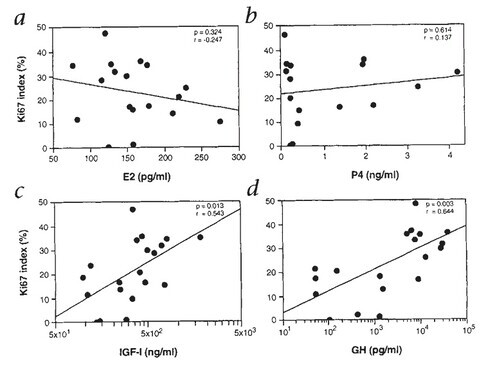
Growth hormone treatment induces mammary gland hyperplasia in aging primates "The decline of growth hormone (GH) and insulin-like growth factor I (ICF-I) production during aging has been likened to the decrease in gonadal steroids in menopause. The repletion of GH/IGF-I levels in aging individuals is suggested to restore the lean tissue anabolism characteristic of youth1. In addition to anabolic effects on musculoskeletal tissues, GH also stimulates mammary glandular growth in some species2–4, although its effects on primate mammary growth remain unclear5. Some clinical observations implicate GH in human mammary growth, for example, gynecomastia occurs in some children treated with GH (ref. 6), and tall stature and acromegaly are associated with an increased incidence of breast cancer7,8. To investigate the effects of GH/IGF-I augmentation on mammary tissue in a model relevant to aging humans, we treated aged female rhesus monkeys with GH, IGF-I, GH + IGF-I or saline diluent for 7 weeks. IGF-I treatment was associated with a twofold increase, GH with a three- to fourfold increase, and GH + IGF-I with a four- to fivefold increase in mammary glandular size and epithelial proliferation index. These mitogenic effects were directly correlated with circulating GH and IGF-I levels, suggesting that either GH or its downstream effector IGF-I stimulates primate mammary epithelial proliferation." 1997 16-20yo monkeys. Mean E2 in 125-180 pg/ml. Treated with 0.1mg/kg of GH and similar amount of IGF-1 for the relevant groups (ekhm, a buttload of GH, similar to treatment of muscle wasting with HIV). Ki67 - index for % of cells in mammary ducts in proliferative state. Looks like endogenous E2 levels did not have a significant relationship with mammary ductal proliferation rate. These are average-low levels, by our standards. Meaning breast development via GH/IGF stimulation happens regardless of rather average-low E2 levels (ergo, those levels are not an impediment) in an aging group. This study does not demonstrate the cross-effect of exogenous high E2 doses on GH/IGF1 activity and breast development. |
LenaDid you have confusion about this as well?Yes. Endocrinologists love blood tests. An endo said that one of my customersto induce IGF-I mRNA and possibly IGF-I itself, which, in turn, had enlarged tongue, ordered blood tests for IGF-1. Found elevated. The customer didn't have miracle breast growth. Neither before switching to injectable EV (7 mg every 5 days) nor after. |
noface 🇺🇦Well, no, early terminal end bud formation is of course undesirable.Well, so, I went to recheck what I read before. I think I had some confusion re. nomenclature and terminal end buds. We want TEB formation, as this is what drives branching and further elongation of the duct tree. Progesterone converts these into alveoli. Did you have confusion about this as well? https://www.ncbi.nlm.nih.gov/pmc/articles/PMC5488158/ The Terminal End Bud: the Little Engine that Could "The mammary gland is one of the most regenerative organs in the body, with the majority of development occurring postnatally and in the adult mammal. Formation of the ductal tree is orchestrated by a specialized structure called the terminal end bud (TEB). The TEB is responsible for the production of mature cell types leading to the elongation of the subtending duct. The TEB is also the regulatory control point for basement membrane deposition, branching, angiogenesis, and pattern formation. While the hormonal control of TEB growth is well characterized, the local regulatory factors are less well understood. Recent studies of pubertal outgrowth and ductal elongation have yielded surprising details in regards to ongoing processes in the TEB. Here we summarize the current understanding of TEB biology, discuss areas of future study, and discuss the use of the TEB as a model for the study of breast cancer." On Sun, Oct 24, 2021 at 03:31 PM, Lena wrote: to induce IGF-I mRNA and possibly IGF-I itself, which, in turn,We don't want differentiation of epithelial ducts into terminal end buds: |
CallieCool stuff, thank you, I would also wonder a bit about electrolyte balance
but probs not mainly that cuz I tried to fix hydration issues(feeling thirsty etc) when I had high E and electrolytes helped some but there was definitely something else going on due to hormones. Back when I was on like 25 mg per day cypro(fuckeddd lol) and low dose sublingual E with swallowing I had a period of heart flutter for things and a couple instances of passing out too, that hasn't happened in a while, I can get low blood pressure sometimes but it's rare and determined by getting overly dizzy when I stand lol. I think I was getting it more but figured something out about it but can't remember by now lol. I'm doing topical now though. Trying to get down to lower levels/dose still cuz I ramped up pretty high to transition off injections which had probably gotten a bit high again and was figuring it the topical thing, making my own topical stuff etc On Fri, Oct 29, 2021, 3:40 PM noface <antonysavich@...> wrote:
I'm probably misstating arrhythmia. I did not go to a caridolgist to get |
noface 🇺🇦I'm probably misstating arrhythmia. I did not go to a caridolgist to get it properly diagnosed at the time because I did not want to risk complications with my dosa freedom until I figured out what's good for me on my own. Risky stuff, I know, but it worked out ok.
I would say my palpitations were also very strong, rather than it being arrhythmia. They were very strong all the time, and erratic only some of the time. So, probably something similar to what you experienced. I knew only of adrenal suppression via high E2 at the time. I further investigated other pathways following that, and it appears the link is likely stronger with hGH activity suppression (in high E2 levels, the E2 knocks out external part of hGH receptors in the liver which become GHBP in the blood - bind to hGH and deactivate it, reducing hGH activity and consequently lowering IGF-1 production via more hGH in blood (negative feedback of lower IGF-1 levels) but at lower overall activity levels due to GHBP mopping it up at greater rates). Subjectively this also interfered with feminization (hair, skin issues, breast development stimulation reduction) much like oral E2 also does. hGH activity reduction can lead to all sorts of issues, for body and brain alike. The review in the article I linked today has a good overview of those, many of which I think I experienced on higher E2 levels. On Fri, Oct 29, 2021 at 03:19 PM, Mélodie wrote:
|
MélodieThat might explain why palpitations are stronger when I am in a lying or sitting position. Maybe I should see an osteopath.
On Fri, Oct 29, 2021 at 09:30 PM, Lena wrote:
|
LenaWomen are in average more flexible than men because
estradiol makes ligaments more extensible. Including in the spinal column. Vertebrae pinched a nerve to heart. I had https://en.wikipedia.org/wiki/Premature_heart_beat When I straghten (chest forward, head up and back), the palpitations stop. |
MélodieThanks for the details. As for myself I have been experiencing strong palpitations (premature ventricular contraction) after a few months taking 9mg EEn weekly (or 3x11mg monthly). I had to switch back to transdermal administration (gel). Beside that my blood testosterone level has been not measurable for more than 3 years. I don't know how to link all of this to growth hormone deficiency.
On Fri, Oct 29, 2021 at 08:45 PM, noface wrote:
|